Black Stork Webcam Discussion ~ Tiit & Tiina~ 2012
-
Felis silvestris

- Site Admin
- Posts: 20038
- Joined: February 20th, 2011, 4:54 pm
- Location: Germany
Re: Black Stork Webcam Discussion ~ Tiit & Tiina~ 2012
The only thing I can think about which could make problems are scales. Fish definitely goes "in" better by head first, but when regurgitated? It's very fast when they do it, plus the wings of the storklets flapping around and their beaks poking in the parent's beak.
“One can measure the greatness and the moral progress of a nation by looking at how it treats its animals” (Mahatma Gandhi)
"You can judge a man's true character by the way he treats his fellow animals" (Paul McCartney)
The Aquila Pomarina Collection
"You can judge a man's true character by the way he treats his fellow animals" (Paul McCartney)
The Aquila Pomarina Collection
-
alice44
- Registered user
- Posts: 16489
- Joined: April 8th, 2009, 8:59 pm
- Location: Oregon, Western USA
It is all just chaos to meFelis silvestris wrote:The only thing I can think about which could make problems are scales. Fish definitely goes "in" better by head first, but when regurgitated? It's very fast when they do it, plus the wings of the storklets flapping around and their beaks poking in the parent's beak.

-
Lucy

- Registered user
- Posts: 773
- Joined: December 1st, 2008, 5:34 pm
- Location: Łódź, Poland
Good morning 
Yesterday, there were some other birds here.
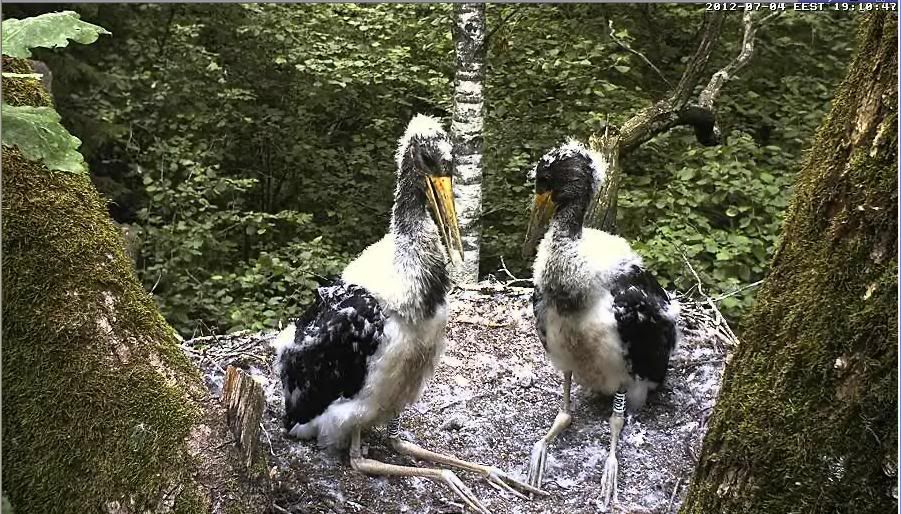
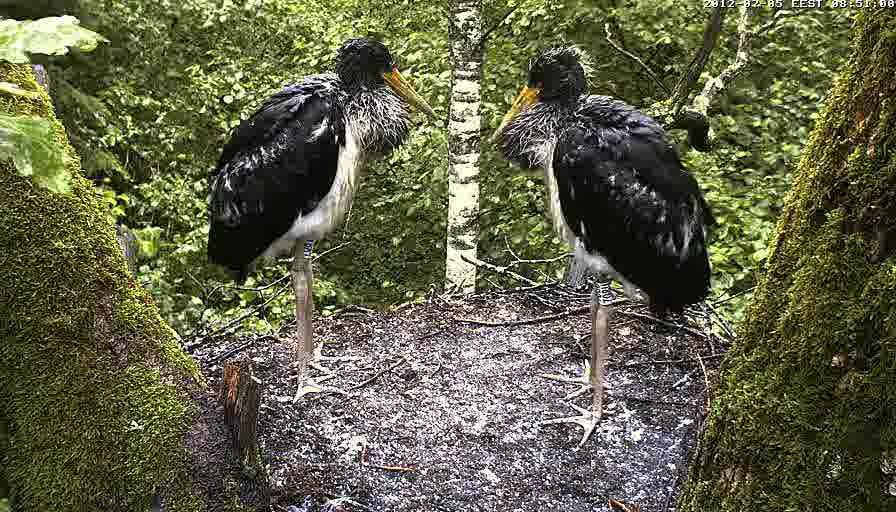
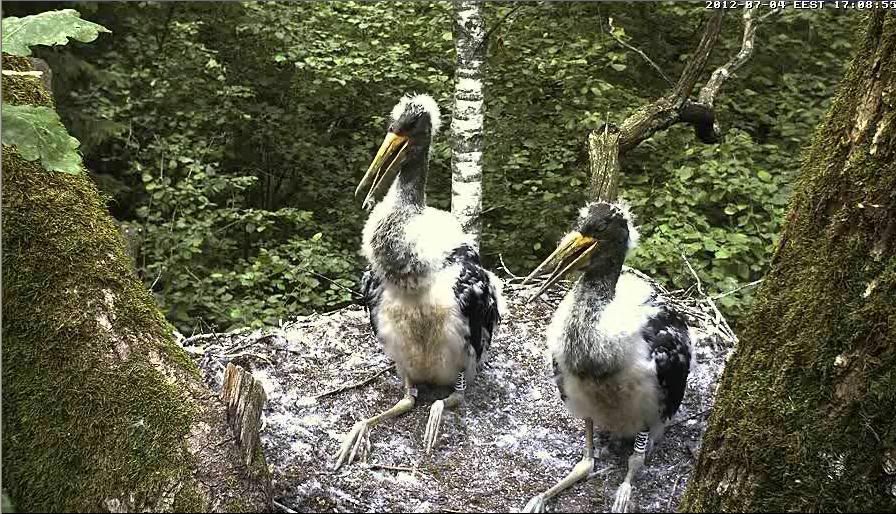
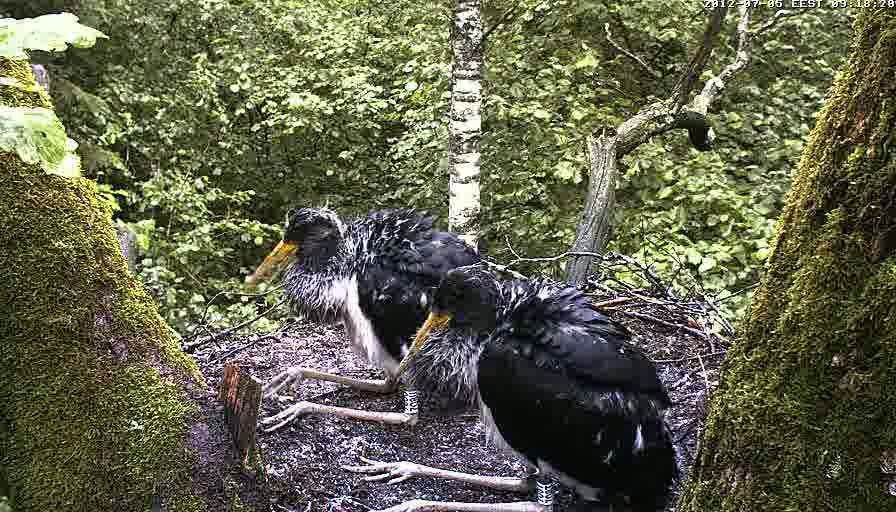
Yesterday, there were some other birds here.
-
baska

- Registered user
- Posts: 1897
- Joined: August 28th, 2011, 7:04 pm
- Location: Odenwald/Hessen, Germany
July 5th
Good morning everybody
Hello, Dr. Madis
It is easily comprehensible where the trematodes are coming from and how they are passed to the storklets.
But I don't understand the connection between these trematodes and the fracture of the beak.
Are the trematodes able to penetrate even a beak, so that they let the beak get breakable?
I wonder how the beak looked like after you took off the bandage....
So I'm very curious about your next report!
Good morning everybody
Hello, Dr. Madis
Thank you once more Dr. Madis for your detailed report of your examination.Madis wrote:Howdy!
..........
A bit about the trematode also... they are whit indirect development, they need to have 2 hosts before they can develop to adult trematodes. Usually the first hosts are snails and second host is fishes, so stork will get infected eating the infected fishes. Nestlings should get the adult trematodes from their parents when they regurgitate food to nestlings. Another interesting thing is that its described that that trematode can do hes developmental cycle through in warm climates, where the storks winter. so that is what we know about that parasite. The effect of that parasite to black stork population is not well known.
Yesterday evening everything went pretty much according how we planned. One thing what we noticed was that the other side is also nicked (something like if you bend plastic it will leave a line) and kept together by soft tissue and still soft keratin what covers the bone in the beak. That's why the fractured tip of the beak is so bendy.
Anyways today morning he got fish for food (today morning I went to the market and got him some small herring), hes meds and fluids. In the evening I'm taking off the bandage and will see how is the fractures doing. Lets hope for the best - that's what we can do.
Cheers,
--
With best regards,
Madis Leivits, DVM
Expert-veterinary
Estonian Fund for Nature
It is easily comprehensible where the trematodes are coming from and how they are passed to the storklets.
But I don't understand the connection between these trematodes and the fracture of the beak.
Are the trematodes able to penetrate even a beak, so that they let the beak get breakable?
I wonder how the beak looked like after you took off the bandage....
So I'm very curious about your next report!
greetings from Baska
We are living in a dangerous age. Human beings are controlling and dominating the nature, before they have learned to control themselves.
Albert Schweitzer
We are living in a dangerous age. Human beings are controlling and dominating the nature, before they have learned to control themselves.
Albert Schweitzer
-
Starling

- Registered user
- Posts: 4377
- Joined: July 2nd, 2012, 9:16 pm
- Location: Helsinki, Finland
Thanks for the comparison pics. What a change in one day!Lucy wrote:Good morning
Yesterday, there were some other birds here.

-
pziel
- Registered user
- Posts: 15
- Joined: May 19th, 2012, 2:02 pm
Piotr
The is one difficulty.
In the dorsal fin many fish species have hard spikes. Swallowing head first they cause no problems, but in the opposite direction spikes may hurt oesophagus. For example the well known to everybody fish - carp (Cyprinus carpio) has hard spikes in the dorsal fin. And if there is a pond nearby with carps, parent storks bring them to the nest. I have seen on the nest carps 19 cm long (120 g) and they had hard spikes. It is interesting how adult storks overcome the difficulty of regurgitating such armed with spikes prey.
Piotr
Why,pziel,is it of any importance whether fish regurgitated head or tail first
The is one difficulty.
In the dorsal fin many fish species have hard spikes. Swallowing head first they cause no problems, but in the opposite direction spikes may hurt oesophagus. For example the well known to everybody fish - carp (Cyprinus carpio) has hard spikes in the dorsal fin. And if there is a pond nearby with carps, parent storks bring them to the nest. I have seen on the nest carps 19 cm long (120 g) and they had hard spikes. It is interesting how adult storks overcome the difficulty of regurgitating such armed with spikes prey.
Piotr
-
pziel
- Registered user
- Posts: 15
- Joined: May 19th, 2012, 2:02 pm
Thank you George for the video. It seems you are right.it is almost impossible to catch this moment. In this slow motion video may be the tail was the first.
Piotr
-
Lucy
- Registered user
- Posts: 773
- Joined: December 1st, 2008, 5:34 pm
- Location: Łódź, Poland
No breakfast today? Where are our parents? 
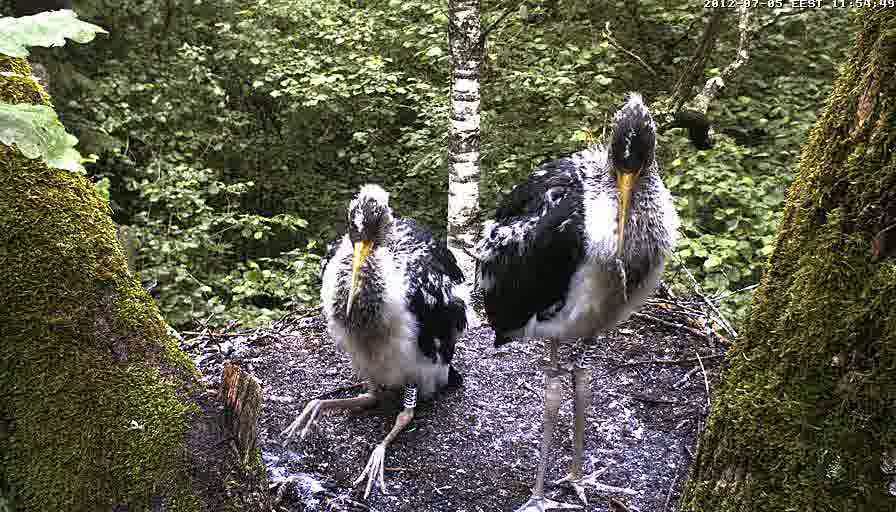
-
macko50

- Registered user
- Posts: 1527
- Joined: January 16th, 2009, 6:42 pm
- Location: Hungary, Budapest
13:18 Feeding
Slow motion.
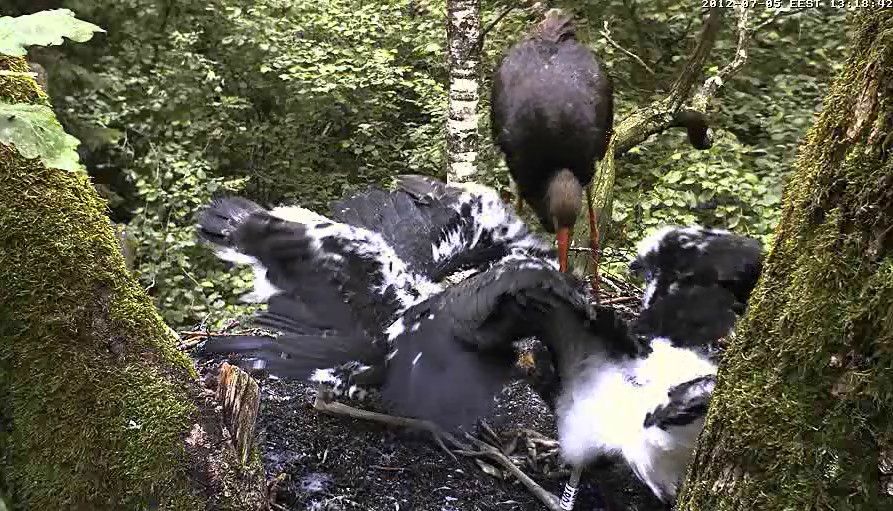
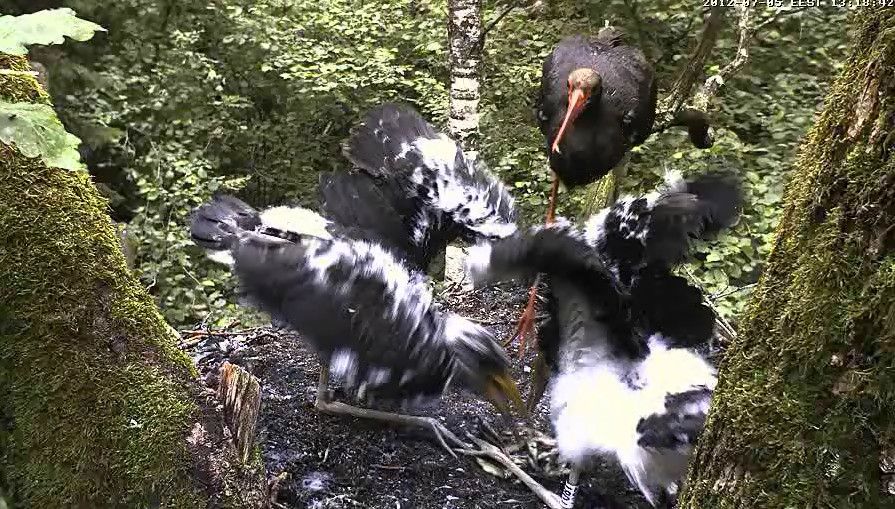
Slow motion.
"One can measure the greatness and the moral progress of a nation by looking at how it treats its animals." - Mahatma Gandhi
George
http://madarlesok.lapunk.hu/
George
http://madarlesok.lapunk.hu/
-
Bleggi

- Registered user
- Posts: 2487
- Joined: April 17th, 2010, 11:54 am
- Location: Germany, Bavaria
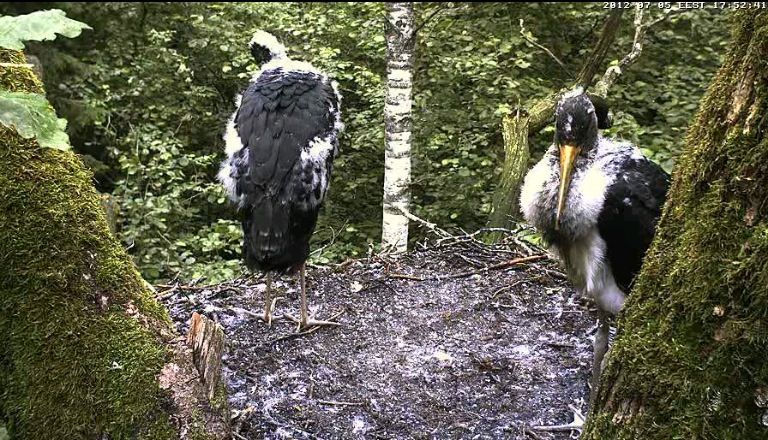
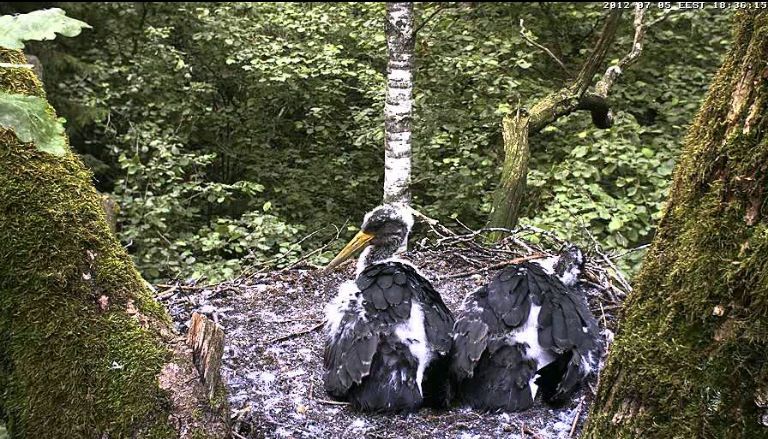
"Life is dull without food and our other sibling, isn't it? Lenny, where are you and above all how are you?"

-
Lussi05

- Registered user
- Posts: 10043
- Joined: April 21st, 2011, 8:10 pm
- Location: Norway
-
Felis silvestris
- Site Admin
- Posts: 20038
- Joined: February 20th, 2011, 4:54 pm
- Location: Germany
I just managed one day today as there was a thunderstorm with hail and the next one is just coming.
But here is June 30 for checking
http://s1127.photobucket.com/albums/l63 ... 6_June-30/
But here is June 30 for checking
http://s1127.photobucket.com/albums/l63 ... 6_June-30/
“One can measure the greatness and the moral progress of a nation by looking at how it treats its animals” (Mahatma Gandhi)
"You can judge a man's true character by the way he treats his fellow animals" (Paul McCartney)
The Aquila Pomarina Collection
"You can judge a man's true character by the way he treats his fellow animals" (Paul McCartney)
The Aquila Pomarina Collection
-
macdoum

- Registered user
- Posts: 6786
- Joined: November 17th, 2008, 12:12 am
- Location: Alsace, France
Here too Felis...I'm in for a moment but last night we got a power outage (due to fire nearby...no one injured) and I lost internet...our son by phone got us a temp. connexion but I'm not going chance loosing that.Felis silvestris wrote:I just managed one day today as there was a thunderstorm with hail and the next one is just coming.
But here is June 30 for checking
http://s1127.photobucket.com/albums/l63 ... 6_June-30/
No emails in or out until they visit on 21st..  )
)PMs OK as I can come here to see.
BBL if storm passes.

Carmel a member of SHOW .. I hope you love birds too. Its economical. It saves going to heaven.
Emily Dickinson
Emily Dickinson
-
Lucy
- Registered user
- Posts: 773
- Joined: December 1st, 2008, 5:34 pm
- Location: Łódź, Poland
I've been away for hours. Is it possible that Tiit hasn't delivered any food today, and that the storklets were fed only once by Tiina, at 13:18? Has anyone seen Tiit today? That's very strange ...

-
Bleggi
- Registered user
- Posts: 2487
- Joined: April 17th, 2010, 11:54 am
- Location: Germany, Bavaria
I only watched the feeding that is shown here. If I had known that many people is on its way I had watched more the stork cam. So I had another one where we are waiting for power who got lost since nearly one week.
I hope that everything will be okay - I went to the side more often and saw the storks sitting, standing and laying around.
 Bleggi
I hope that everything will be okay - I went to the side more often and saw the storks sitting, standing and laying around.
Bleggi-
Swenja

- Registered user
- Posts: 7250
- Joined: July 3rd, 2012, 2:35 pm
- Location: Berlin, Germany
hello,
we know already, what was the cause of the injury? I've seen the pictures from the 06/29/12 again. There is a photo, on the very recent injury beak. http://s1127.photobucket.com/albums/l63 ... -16-06.jpg

greeting
we know already, what was the cause of the injury? I've seen the pictures from the 06/29/12 again. There is a photo, on the very recent injury beak. http://s1127.photobucket.com/albums/l63 ... -16-06.jpg

greeting
Freedom!
-
macko50
- Registered user
- Posts: 1527
- Joined: January 16th, 2009, 6:42 pm
- Location: Hungary, Budapest
Hello Lucy,Lucy wrote:
Is it possible that Tiit hasn't delivered any food today, and that the storklets were fed only once by Tiina, at 13:18? Has anyone seen Tiit today? That's very strange ...
there was a feeding at about 14:00 by Tiit, but I missed recording it, and after I have been away also.
"One can measure the greatness and the moral progress of a nation by looking at how it treats its animals." - Mahatma Gandhi
George
http://madarlesok.lapunk.hu/
George
http://madarlesok.lapunk.hu/
-
Felis silvestris
- Site Admin
- Posts: 20038
- Joined: February 20th, 2011, 4:54 pm
- Location: Germany
I was at work all day and when I could I looked in to the Latvian ospreys as they were ringed yesterday afternoon, but quite late. But once the Pontu pictures for yesterday are downloaded (today evening, when I'm at home) I'll flip trough, sometimes Pontu catches a feeding. Has to be at the right time, though, and since they usually are very fast, it's not so often.
“One can measure the greatness and the moral progress of a nation by looking at how it treats its animals” (Mahatma Gandhi)
"You can judge a man's true character by the way he treats his fellow animals" (Paul McCartney)
The Aquila Pomarina Collection
"You can judge a man's true character by the way he treats his fellow animals" (Paul McCartney)
The Aquila Pomarina Collection
-
Lussi05
- Registered user
- Posts: 10043
- Joined: April 21st, 2011, 8:10 pm
- Location: Norway
Good morning
08:10 - Morning mood..
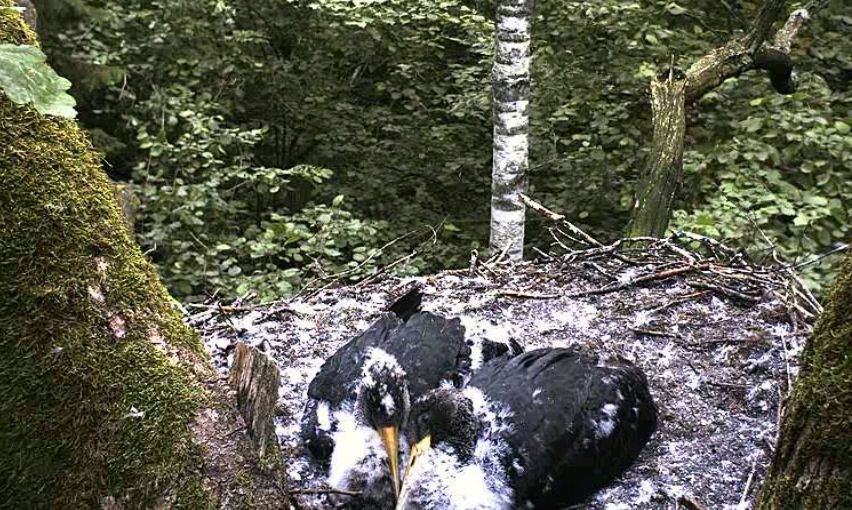
- No news about Lenny?
08:10 - Morning mood..
- No news about Lenny?
-
Starling
- Registered user
- Posts: 4377
- Joined: July 2nd, 2012, 9:16 pm
- Location: Helsinki, Finland
Good morning.Lussi05 wrote:Good morning
08:10 - Morning mood..
- No news about Lenny?
I´m also anxious to hear how´s Lenny doing...