
Priidu's Son's Journey Ends in Saudi Arabia
Background map: Google Maps
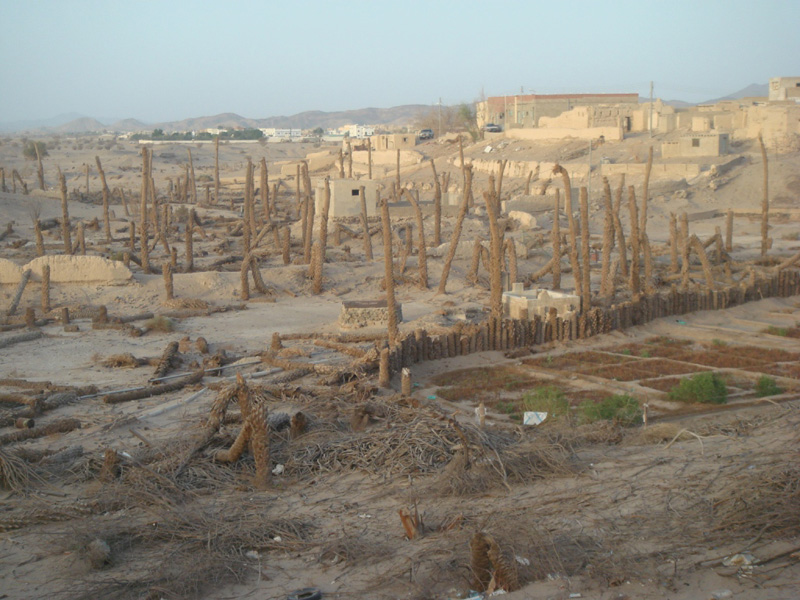
He obviously found nothing to eat there…
Click to enlarge map
On the 8th of October, when all the previous days information had been transmitted, it became clear that all was not right concerning Priidu's son. Storkaholics (stork-camera-addicts throughout the world) began a search for contacts in Saudi Arabia. By noontime on October 9th contact information was found and letters sent. The first to answer was Abdullah Alsuhaibany, who wrote that it would be necessary to immediately have a look, since he was located "only" 350 kilometers from Priidu's son's last known coordinates. The following is Abdullah's letter concerning how things developed:
On the 9th of October at 5:30 I was with Mohammed checking a spot 90 kilometers south of Jeddah which is a dangerous spot for migratory birds due to a network of electric lines—236 White Storks had been killed by the power lines there on the 25th of August. We found many dead birds, including many quail, corncrake, and turtle dove, as well as small numbers of various species of warblers and shrikes. We were conducting a private survey in an effort to collaborate with the electric company to solve the problem in this "bottleneck" area for migratory birds. When I returned home after the morning trip, I found your emails about Priidu's son. I decided to leave that moment. I was together with Mohammed at his relatives' wedding where we spent a little time. But when I spoke to Mohammed about Priidu's son, he insisted on joining me. We left the wedding, changed clothes, and left for Jeddah around 2:00 a.m. We arrived at the site at 05:40 (no time to camp or sleep) and it was still dark. Soon the sun rose and we began the search for the bird. Fortunately, Mohammed had a GPS with him, and we were able to get within 20 meters of the location before the battery died! About this time a farmer named Jammal appeared and we asked him about a black bird with a transmitter on his back. Jammal took us to Priidu's son's body lying in the sand and brought us the transmitter. He had been found alive but very weak around 1 p.m. on October 7th. Jammal tried to give the bird food and water, but Priidu's son refused to eat and was dead by nightfall. So that the transmitter would not be lost, Jammal removed and saved it. We dug a small grave in the sand and buried Priidu's son.

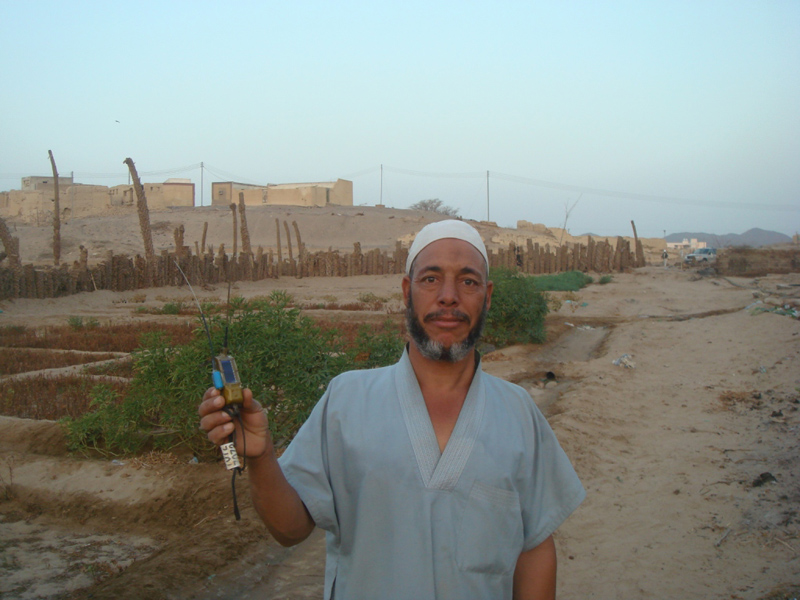
Abdullah Alsuhaibany now works in wildlife preservation in the Red Sea area. Dr. Mohammed Shobrak is a well-known ornithologist in this region.
Our sincere thanks to Jammal, Abdullah, and Mohammed!
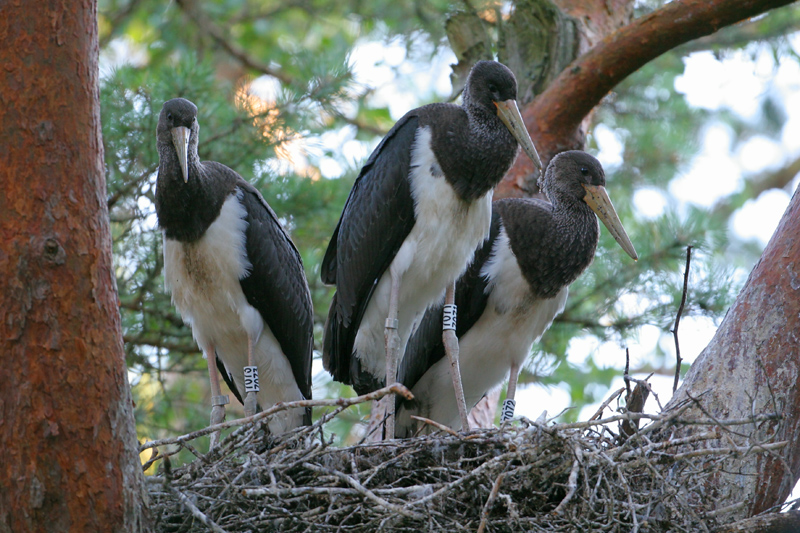
In remembrance: One photo of Priidu's son (7072), with his sister (7073) and brother (7071) in their Saaremaa nest.
He managed to fly a distance of 4,000 kilometers. Had he only not chosen the wrong direction on the banks of the Red Sea…
Background map: Google Maps
He obviously found nothing to eat there…
Click to enlarge map
On the 8th of October, when all the previous days information had been transmitted, it became clear that all was not right concerning Priidu's son. Storkaholics (stork-camera-addicts throughout the world) began a search for contacts in Saudi Arabia. By noontime on October 9th contact information was found and letters sent. The first to answer was Abdullah Alsuhaibany, who wrote that it would be necessary to immediately have a look, since he was located "only" 350 kilometers from Priidu's son's last known coordinates. The following is Abdullah's letter concerning how things developed:
On the 9th of October at 5:30 I was with Mohammed checking a spot 90 kilometers south of Jeddah which is a dangerous spot for migratory birds due to a network of electric lines—236 White Storks had been killed by the power lines there on the 25th of August. We found many dead birds, including many quail, corncrake, and turtle dove, as well as small numbers of various species of warblers and shrikes. We were conducting a private survey in an effort to collaborate with the electric company to solve the problem in this "bottleneck" area for migratory birds. When I returned home after the morning trip, I found your emails about Priidu's son. I decided to leave that moment. I was together with Mohammed at his relatives' wedding where we spent a little time. But when I spoke to Mohammed about Priidu's son, he insisted on joining me. We left the wedding, changed clothes, and left for Jeddah around 2:00 a.m. We arrived at the site at 05:40 (no time to camp or sleep) and it was still dark. Soon the sun rose and we began the search for the bird. Fortunately, Mohammed had a GPS with him, and we were able to get within 20 meters of the location before the battery died! About this time a farmer named Jammal appeared and we asked him about a black bird with a transmitter on his back. Jammal took us to Priidu's son's body lying in the sand and brought us the transmitter. He had been found alive but very weak around 1 p.m. on October 7th. Jammal tried to give the bird food and water, but Priidu's son refused to eat and was dead by nightfall. So that the transmitter would not be lost, Jammal removed and saved it. We dug a small grave in the sand and buried Priidu's son.
Abdullah Alsuhaibany now works in wildlife preservation in the Red Sea area. Dr. Mohammed Shobrak is a well-known ornithologist in this region.
Our sincere thanks to Jammal, Abdullah, and Mohammed!
In remembrance: One photo of Priidu's son (7072), with his sister (7073) and brother (7071) in their Saaremaa nest.
He managed to fly a distance of 4,000 kilometers. Had he only not chosen the wrong direction on the banks of the Red Sea…
 Tags: Stork Travels