 Latest news
 Loodusemees.ee - the day in pictures
 Videos
 My Forest
Winter as the mixer of the genes of great tits?
Science news from the Year of the Great Tit edited by Marko Mägi, marko.magi@ut.ee bird ecology scientist at the University of Tartu
Translation Liis
Published in Estonian 17,01.2017
Science news from the Year of the Great Tit edited by Marko Mägi, marko.magi@ut.ee bird ecology scientist at the University of Tartu
Translation Liis
Published in Estonian 17,01.2017
Scientific news from the Year of the Great Tit edited by Marko Mägi, marko.magi@ut.ee , bird ecology researcher at the University of Tartu
Translation Liis
Published in Estonian 29.12.2017
Ecologically species can be divided into specialists and generalists. While the specialissed species are adapted to specific environmental conditions and rapid changes may become difficult for them, then generalists can cope with a variety of conditions – both urban and rural, warm or cold, in forests or open spaces. Thus it is no surprise that that the generalists are often synanthropes, or associated with humans, i e species that have been able to adapt urban life and become numerous, due to their high adaptivity and small selectivity. One of the best known generalists is man himself who can cope in all regions (except the Arctic areas). Few animal species manage to match humans in this.
Text and photos Tiit Hunt, www.rmk.ee
Translation Liis
One of the characteristics in Estonia’s new visual identity is the concept of erratic boulders. Estonia has the greatest number of erratic boulders in the whole of Europe.
This might inspire nature fans to go on a trip to see some of the more sizeable giant boulders for themselves for a change. Bare trees and an almost non-existent snow cover favour such ventures in all ways. Even in a dense thicket all kinds of geological sights stand out much more clearly now.
Text University of Tartu bird ecology researcher Marko Mägi and coordinator of the Year of Great Tit Margus Ots,
The great tit that has been staying overnight in the nest box has gathered many viewers via the webcam. Lately it has arrived in the nest box in the evenings between 16.00-17.00 and left by 8.00 at the latest in the mornings. Thus it sleeps more than 15 out of 24 hours during the dark period. How much energy does the tit use during the long winter nights and how much weight does it lose?
The camera image is transmitted by OÜ Teetormaja: www.tt.ee
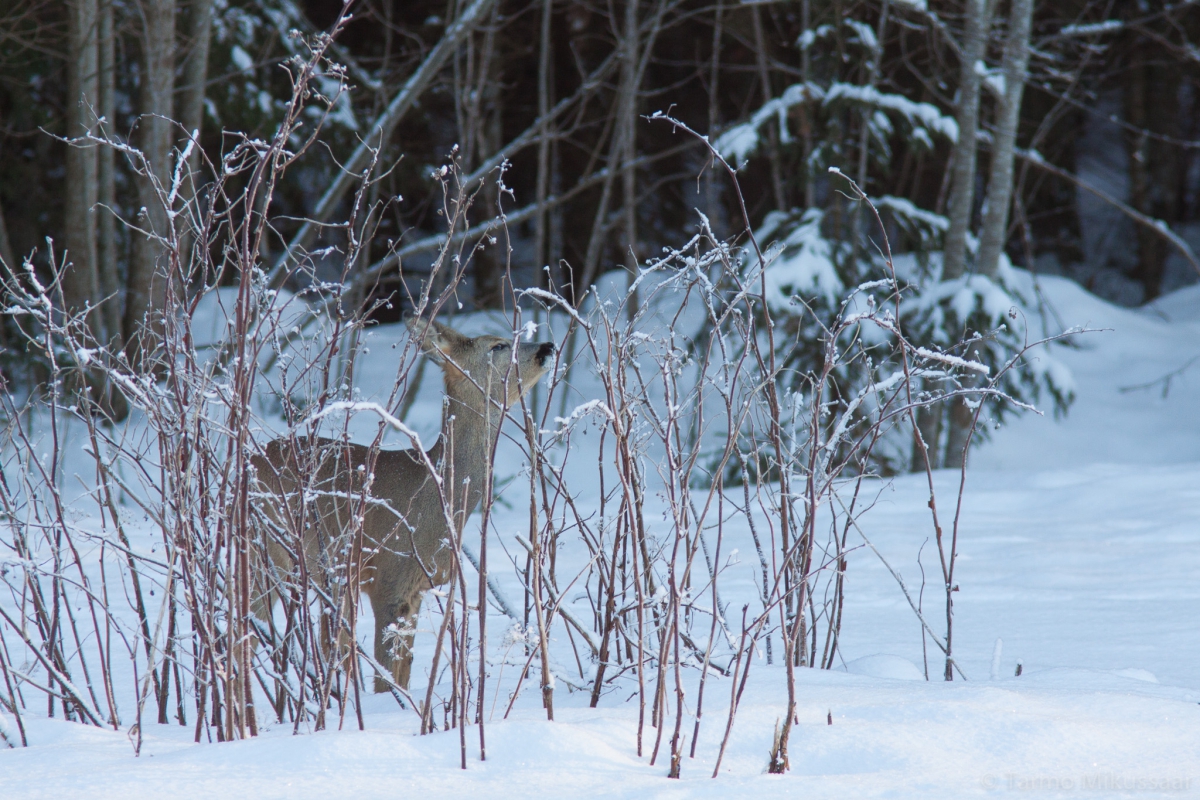
This winter brings only pleasure for roe deer. Thick, layered snow does not prevent movements nor make it difficult to get at food. Digging a sleeping place needs no hard work either. Unlike elks, roe deer must not sleep on snow, only on the ground. Otherwise health problems quickly arrive. Pneumonia or diarrhoea would very probably mean that the next spring will remain unseen.




Copyright 2025 · Looduskalender
Designed by Zymphonies
We also use analytics & advertising services. To opt-out click for more information.