 Latest news
 Loodusemees.ee - the day in pictures
 Videos
 My Forest
VIDEO: Busy in the forest and action tracks
Video Ahto Täpsi
English translation Liis
Estonian text posted 03.02.2019
Video Ahto Täpsi
English translation Liis
Estonian text posted 03.02.2019
Screencap from webcam Biker, LK forum
English translation Liis
Estonian text posted 04.02.2019
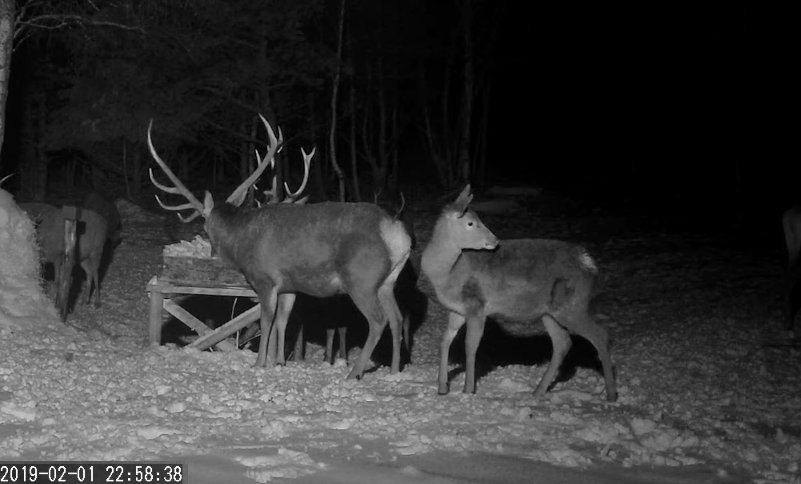
Red deer Punahirv Cervus elaphus
As was expected the female deer have started moving around at the feeding ground. We have just not had any good images showing both sexes before.
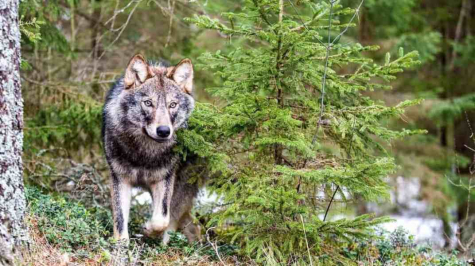
For forest owners , the control of wild herbivore populations by predators is helpful.
Photo: Sergei Gorškov, https://wilderness-society.org
Estonian text posted by the Team of the Animal of the Year 03.02.2019
English translation Google Translate
The utility of large carnivores for the entire ecosystem is quite clear to all. For humans, predators are generally still considered a problem. However, a study published by Australian and US scientists in Nature Ecology & Evolution in 2018 was specifically dedicated to pointing out the benefits that humans receive from the presence of wild predators.
Video recorded and saved by Ahto Täpsi
English translation Liis
Estonian text posted 02.02.2019
Roe deer Metskits or kaber Capreolus capreolus
The snow cover is thick and has become layered from the intermediate thaws; layers of ice have remained in the snow. The snowfall and thaw at the weekend do not make the life of roe deer easier. The ice layers already damage their legs. It takes time and energy to get to the food and a sleeping place for the night must be dug out down to the ground – otherwise the deer may get pneumonia.
Screencap from webcam IceAge, LK forum
Illustrations from Wikipedia
English translation Liis
Estonian text posted 23.01.2019
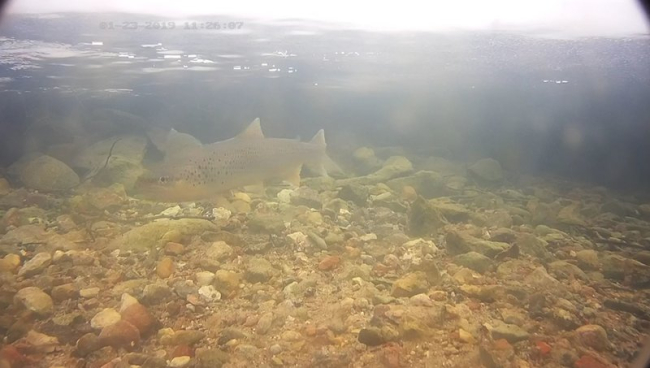
In the spawning area we meet spawners as well as their ”satellites”
Members of the LK forum have been interested in what small animals we can see in action in such waters. The information below is provided by Henn Timm from the Estonian University of Life Sciences:
"In the upper reaches of rivers and streams where the flow is rapid and the water is cold there is almost no plankton. The zoobenthos (the animal fauna of the bottom) is dominated by crenobiotic species (invertebrate aquatic organisms living in cold spring waters), for instance unicellular species, crustaceans, insect larvae, leeches, snails … Typical fish species are river trouts and graylings “.




Copyright 2025 · Looduskalender
Designed by Zymphonies
We also use analytics & advertising services. To opt-out click for more information.